Schema Markup for AEO: What to Use and Why
Schema helps answer engines understand your content and entities. Here is which structured data matters for AEO, how to use it correctly, and the rules to follow.

TL;DR
Schema does not magically rank you, but it helps answer engines understand your content and entities accurately, which supports citation. The most useful types for AEO are Organization or LocalBusiness, Person, FAQPage, Article, Breadcrumb, and Service. The golden rule: schema must reflect real, visible content. Fake or hidden markup violates guidelines and can hurt you.
Schema markup is structured data that tells search and answer engines what your content means, not just what it says. For AEO, that clarity matters, because the easier it is for a machine to understand your entity and your answers, the easier you are to cite. Here is what to use and the rules that keep it safe.
Why schema matters for AEO
Answer engines work from structured understanding. Schema reduces ambiguity about who you are, what you offer, and what your content answers. It does not directly boost rankings, but it strengthens the entity and content signals that AEO and rich results depend on.
The schema types that matter
- Organization or LocalBusiness: defines your business entity, name, location, and contact, the anchor for everything else.
- Person: establishes authorship and expertise, useful for E-E-A-T.
- FAQPage: marks up genuine on-page questions and answers, which maps directly to how answer engines work. See how FAQs strengthen a page.
- Article: clarifies content, author, and dates for guides and posts.
- BreadcrumbList: communicates site structure and context.
- Service: describes what you offer and where, useful for service businesses.
The rules to follow
The non-negotiable rule: schema must reflect real, visible content on the page. Marking up FAQs that are not shown, fabricating reviews, or stuffing keywords into structured data violates Google's guidelines and can earn a manual action. Keep it accurate, keep it consistent across the site, and validate it. Done right, schema is a quiet, durable advantage. It is built into every page across my SEO, AEO, and GEO work.
If your site is missing structured data or has inconsistent entity signals, that is often a quick, high-value fix. Get in touch for a schema and entity review.
Written by Shree Krishna Gauli and reviewed for accuracy under our editorial policy.
More from the journal.
 SEO
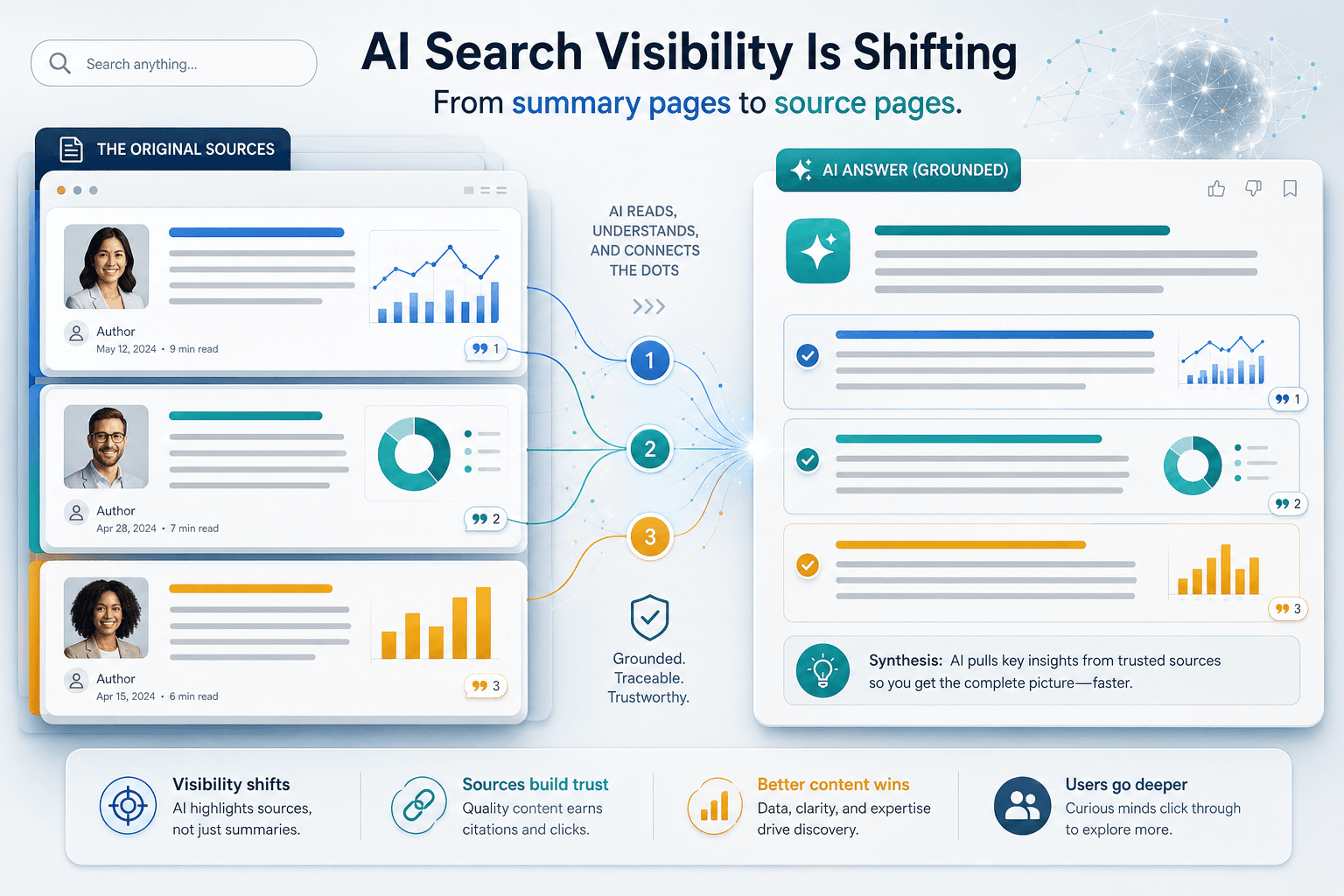
SEOAI Search Is Starting to Separate Source Pages from Summary Pages
Google, Bing, and Perplexity are moving toward citation-worthy source content. Learn what separates a source page from a recap page and how to adapt your content strategy.
Read SEO
SEOWhat Is Answer Engine Optimization (AEO) in 2026?
AI search engines pull answers differently than Google. AEO structures your content so ChatGPT, Perplexity, and Gemini can find, trust, and cite your pages.
Read